
Losing one or more teeth can significantly impact your confidence, oral health, and quality of life. Fortunately, modern dentistry offers several effective solutions to restore your smile. Two of the most common options are dental implants and dentures.
While both treatments replace missing teeth, they differ greatly in terms of comfort, longevity, maintenance, and overall function. Understanding the advantages and limitations of each option can help you make an informed decision about your oral health.
At Sunnyvale Implant Center, patients often ask whether implants or dentures are the better choice. The answer depends on individual needs, goals, and oral health conditions.
Understanding Tooth Loss
Tooth loss affects millions of adults and can occur for many reasons.
Common causes include:
- Advanced tooth decay
- Gum disease
- Dental trauma
- Failed dental restorations
- Age-related oral health issues
Regardless of the cause, replacing missing teeth is important to maintain proper oral function and prevent future complications.
Consequences of Missing Teeth
Untreated tooth loss can lead to:
- Difficulty chewing
- Speech problems
- Jawbone deterioration
- Facial sagging
- Shifting teeth
- Bite misalignment
Both dental implants and dentures can help address these issues, though they do so in different ways.
What Are Dentures?
Dentures are removable prosthetic appliances designed to replace missing teeth.
They can be used to replace a few missing teeth or an entire arch.
Types of dentures include:
- Full dentures
- Partial dentures
- Implant-supported dentures
Traditional dentures rest on the gums and are removable for cleaning.
Benefits of Dentures
Dentures offer several advantages:
- Lower initial cost
- Non-surgical solution
- Faster treatment timeline
- Suitable for many patients
For individuals seeking a budget-friendly option, dentures can provide a functional and aesthetic improvement.
Limitations of Traditional Dentures
Although effective, dentures have some drawbacks.
Potential concerns include:
- Slipping while eating or speaking
- Reduced chewing power
- Bone loss over time
- Need for periodic adjustments
- Use of adhesives
These limitations often lead patients to explore implant options.
What Are Dental Implants?
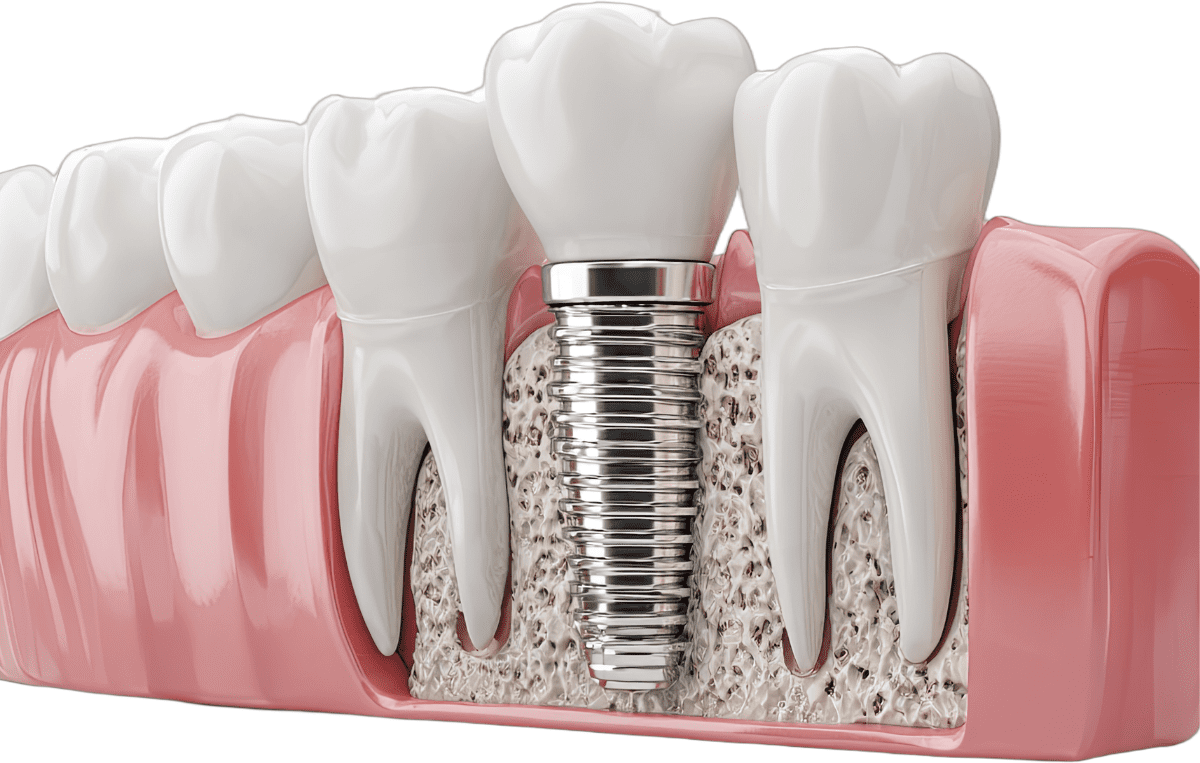
Dental implants are titanium posts surgically placed into the jawbone.
They act as artificial tooth roots and support crowns, bridges, or dentures.
Unlike traditional dentures, implants become integrated with the jawbone through a process called osseointegration.
Components of a Dental Implant
A dental implant restoration consists of:
- Implant fixture
- Abutment
- Dental crown or prosthesis
Together, these components create a stable and natural-looking replacement tooth.
Benefits of Dental Implants
Dental implants offer numerous advantages:
- Permanent stability
- Natural appearance
- Bone preservation
- Improved chewing ability
- Long-term durability
Many patients describe implants as the closest thing to having natural teeth again.
Comparing Comfort and Stability
One of the biggest differences between implants and dentures is stability.
Traditional dentures can shift or move while eating and speaking.
Dental implants are securely anchored within the jawbone, providing exceptional stability.
Speaking with Confidence
Implants allow patients to speak naturally without worrying about movement or slippage.
Denture wearers may occasionally experience speech difficulties as they adjust to their appliances.
Heating Your Favorite Foods
Dental implants restore significantly more biting force than traditional dentures.
Patients can often enjoy foods such as:
- Steak
- Apples
- Nuts
- Crunchy vegetables
Many denture wearers avoid certain foods due to stability concerns.
Bone Preservation and Oral Health
One of the most important advantages of dental implants is their ability to preserve jawbone health.
When a tooth is lost, the supporting bone begins to shrink due to lack of stimulation.
How Implants Prevent Bone Loss
Implants function like natural tooth roots.
Chewing forces stimulate the jawbone, helping maintain density and structure.
Why Dentures Cannot Stop Bone Loss
Traditional dentures sit on top of the gums and do not stimulate the bone.
Over time, bone loss can lead to:
- Poor denture fit
- Facial sagging
- Additional oral health challenges
Long-Term Cost Considerations
Many patients focus on upfront costs when comparing treatment options.
While dentures typically cost less initially, long-term expenses should also be considered.
Ongoing Denture Maintenance
Dentures often require:
- Relines
- Repairs
- Replacements
- Adhesives
These recurring costs can add up over time.
Implant Longevity
Dental implants can last decades and often a lifetime with proper care.
Their long-term durability frequently makes them a worthwhile investment.
Are Implant-Supported Dentures a Good Middle Ground?
For some patients, implant-supported dentures offer the best of both worlds.
These restorations combine the affordability of dentures with the stability of implants.
Benefits include:
- Improved retention
- Enhanced comfort
- Better chewing efficiency
- Reduced bone loss
Many patients who struggle with traditional dentures find implant-supported solutions life-changing.
Who Is a Candidate for Dental Implants?
Most healthy adults are candidates for implant treatment.
Ideal candidates generally have:
- Good overall health
- Healthy gums
- Adequate jawbone volume
Even patients with bone loss may qualify through bone grafting procedures.
Why Patients Choose Sunnyvale Implant Center
Sunnyvale Implant Center specializes in comprehensive tooth replacement solutions.
Patients benefit from:
- Advanced CBCT imaging
- Personalized treatment planning
- Implant expertise
- Full-mouth restoration options
- Bone grafting procedures
These services help ensure predictable and long-lasting outcomes.
FAQs
Are dental implants better than dentures?
Many patients prefer implants because they offer greater stability, comfort, and bone preservation.
How long do dentures last?
Most dentures require replacement every 5–10 years.
Do implants require special maintenance?
No. Implants are cared for similarly to natural teeth through brushing, flossing, and routine dental visits.
Can I switch from dentures to implants later?
Yes. Many patients transition from traditional dentures to implant-supported restorations.
Considering your tooth replacement options? Schedule a consultation at Sunnyvale Implant Center to learn whether dental implants or dentures are right for you.