Eating after dental implant surgery should protect the surgical area while still giving your body the fluids, calories, and protein it needs to heal. The best plan is simple: begin with soft, mild foods, chew away from the surgical site when possible, and advance your diet only as comfort and your dentist’s instructions allow.
Your written postoperative directions are specific to your procedure. Patients who also had an extraction, sinus graft, or bone graft may receive additional restrictions. Contact Sunnyvale Implant Center if your instructions and a general online guide seem different.
The first day
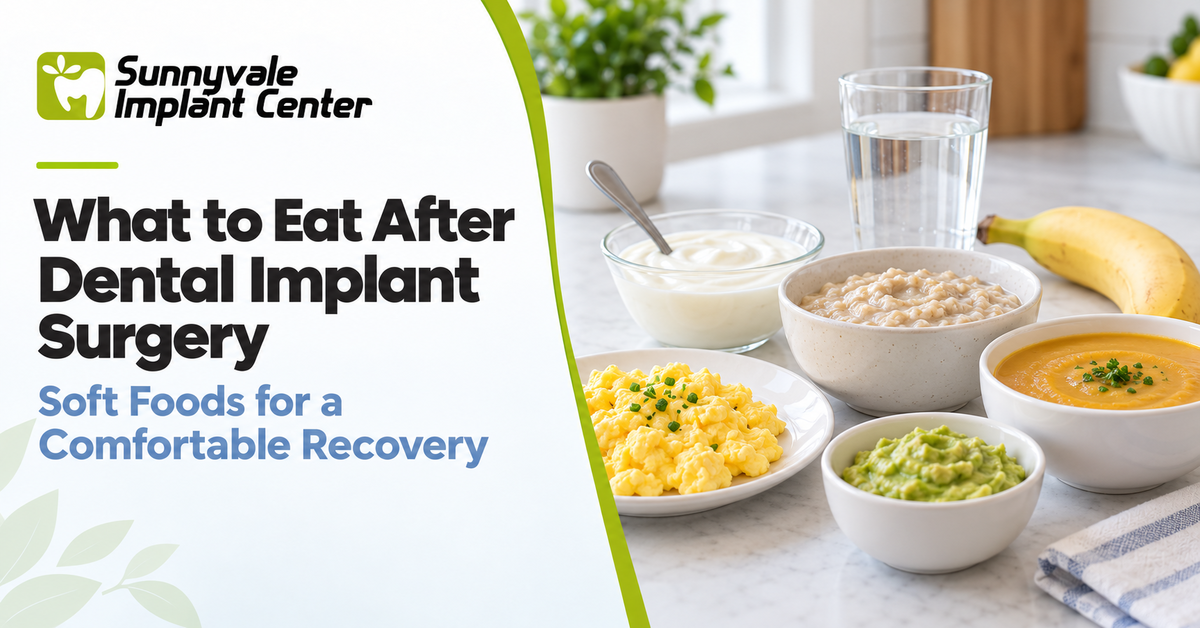
Choose cool or room-temperature foods that require little or no chewing. Options may include yogurt, applesauce, cottage cheese, smoothies eaten with a spoon, mashed avocado, pudding, or cooled blended soup. Sip water regularly unless your medical team has given you a fluid restriction.
Avoid using a straw. Suction can disturb a healing blood clot at an extraction or graft site. Hot foods and drinks may also increase bleeding or irritate numb tissue. Wait until local anesthesia has worn off before chewing so you do not bite your cheek, lip, or tongue.
The ADA notes that dentists may recommend soft foods, cold foods, and warm soup during implant healing. Its patient guide provides a useful overview of the dental implant process.
Soft foods for the next several days
As tenderness improves, add foods with more texture while keeping chewing gentle. Scrambled eggs, soft fish, oatmeal, ripe bananas, steamed vegetables, soft pasta, tofu, hummus, and well-cooked rice are common choices. Cut food into small pieces and chew on the opposite side if directed.
Protein supports tissue repair. Eggs, yogurt, fish, beans, tofu, and smooth nut butter can help you meet your usual needs without hard chewing. If you have diabetes or another condition that affects meal planning, follow the nutrition guidance from your physician or registered dietitian.
Foods and habits to avoid
Hard or crunchy foods can press against the site. Avoid nuts, chips, popcorn, hard bread crusts, ice, and raw crunchy vegetables until your dentist clears them. Small particles such as seeds may lodge near sutures. Sticky foods can pull on a temporary restoration or surgical area.
Very spicy or acidic foods may sting. Alcohol can interact with medications and may not be appropriate during early healing. Smoking and vaping expose the tissues to heat, chemicals, and nicotine; the FDA identifies smoking as a factor that can delay implant healing.
Do not test the implant by chewing something hard. Even when the gums feel better, bone integration continues below the surface.
Returning to a normal diet
There is no universal day when every patient can resume all foods. A straightforward single implant may feel comfortable sooner than a procedure involving several implants or grafting. Increase texture gradually. If chewing causes throbbing, bleeding, or pressure at the site, step back to softer foods and contact the office if the symptom persists.
Patients with a temporary tooth should learn whether it is designed for appearance only or for limited chewing. Applying too much force too soon may affect the temporary restoration or healing implant.
Oral hygiene after meals
Food debris should not be allowed to collect around the surgical area, but aggressive brushing can injure tender tissue. Follow the team’s directions for brushing, rinsing, and any prescribed mouth rinse. Do not force a water flosser, interdental brush, or floss beneath the gums unless your dentist has shown you how and told you when to begin.
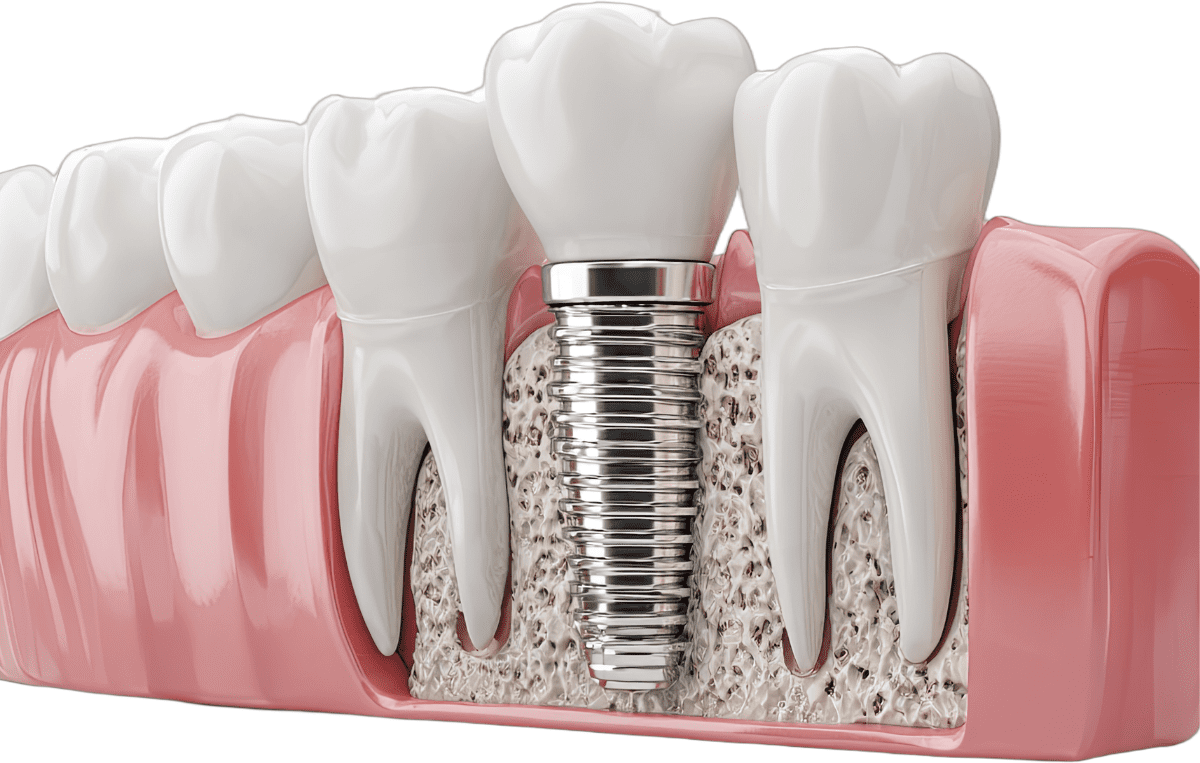
Long-term cleaning becomes especially important after the crown is placed. Learn more about the practice’s dental implant services and the role of professional follow-up.
When eating problems need attention
Call the dental office if you cannot drink enough fluid, vomiting prevents you from taking prescribed medication, numbness lasts longer than expected, or swallowing or breathing becomes difficult. Persistent bad taste, drainage, fever, increasing swelling, or worsening pain also needs professional advice.
Frequently Asked Questions
Can I drink coffee after implant surgery?
Avoid very hot coffee immediately after surgery. Ask your dentist when warm beverages are appropriate, especially if you had grafting or continued bleeding.
Can I eat rice after a dental implant?
Soft, well-cooked rice may be acceptable once you can chew comfortably, but small grains can collect near a surgical site. Follow your instructions and clean the area gently.
How long should I eat soft foods?
The answer depends on the number and location of implants and whether other procedures were completed. Many patients advance gradually over several days, but your dental team should set your schedule.
What if food gets near the implant site
Do not dig at the area. Use only the cleaning or rinsing method your dentist recommended. Contact the office if debris remains trapped or the site becomes painful.
For procedure-specific preparation and aftercare guidance, request an appointment with Sunnyvale Implant Center.